Friends of Millbank


Book Reviews
Scroll down the page for more reviews

Book of the month
The Borneo Graveyard 1941-1945
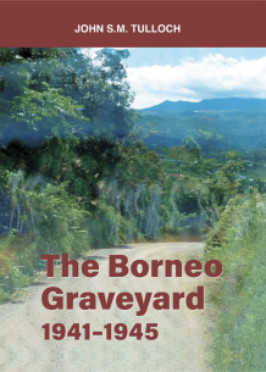
By John SM Tulloch
Opus Publications, Kota Kinabalu (Borneo), 2020: ISBN: ISBN 978-983-3987-65-8
This book follows the raising of five Royal Artillery air defence regiments in 1939, their deployment in late 1941 to South East Asia, their short campaign in the Netherlands East Indies and eventual capture as POWs in Java and North Borneo. It depicts the sadistic treatment of Australian, British, Dutch and Indian POWs in the various POW camps in North Borneo. There were three death marches from Sandakan to Ranau.
The internee account covers the men, women and children from all over Borneo interned in Batu Lintang. They experienced the unspeakable behaviour of the guards. Several internees were killed trying to escape the Japanese regime or gratuitously executed just before liberation.
The locals of Borneo suffered terribly. Torture, executions and massacres occurred throughout. Malnutrition, starvation and death were endemic.
This scholarly and detailed researched book is written by John Tulloch who joined the New Zealand Army in 1965. He won the sword of honour at Officer Cadet School Portsea, Victoria, Australia and was commissioned into the Royal New Zealand Artillery. He served for a year in Vietnam as a troop commander and later as a Forward Observer with 9th Battalion Royal Australian Regiment. He developed great expertise in jungle warfare. He transferred to the British Army in 1973 and had a very active career with numerous deployments. He retired after 38 years’ service. For 21 years, including when he was an MOD civilian, he was called out to Brunei once or twice a year as a visiting jungle warfare instructor for the British Army Training Team Brunei (TTB). That is where I met him.
I have found this book review the most difficult I have ever had to do. For a number of years I was the medical advisor for the Royal British Legion War Graves Pilgrimage Department and I travelled out to the Far East regularly accompanying war widows and veterans. I have stood with widows beside their husbands’ graves and with children beside their fathers’ graves or memorials to the missing. I know how the men died or were murdered by the Japanese. John Tulloch’s book names individuals and the manner of their deaths. I have spoken in Sabah with an old man who as a boy ferried Japanese soldiers across a river on one of the Sandakan “death marches” and who saw the soldiers butcher alive two prisoners of war for fresh meat.
There are apologists for the Japanese who said that soldiers who surrender deserve no compassion. The British and Commonwealth troops who were captured in Singapore and Java did not surrender, they were ordered by their commander to lay down their arms. The code of Bushido is also given as a reason for brutality meted out on the POWs. There are seven virtues of Bushido: Integrity, Respect, Heroic Courage, Honour, Compassion, Honesty & Sincerity, and Duty & Loyalty. No one can ever deny the Heroic Courage of the Japanese soldiers, but where were the integrity, respect and compassion? I have stood by the graves of the three medical officers who survived the Sandakan death marches and whose outstanding medical care to the POWs was rewarded by being shot two weeks after the war had ended. The Japanese wanted no witnesses to their war crimes.
About 20% of the British, Commonwealth and Dutch POWs died on the horrific Siam–Burma Railway. By contrast every POW on Borneo’s Labuan and other Indonesian islands like Ambon and Ballale was murdered when they had finished building the airstrips for the Japanese. At Sandakan, the three death marches to Ranau, and at Ranau, 99.75% of the POWs perished by various means. Six Australians who escaped into the jungle miraculously survived and were saved by locals at great risk to themselves. There were no British POW survivors.
John Tulloch tells the story of POWs and civilian internees factually and with compassion. Their Red Cross food parcels were kept and stored by the Japanese while their prisoners starved to death. There will never be a better account written of this terrible time between 1941 and 1945 unless there is ever more access to Japanese records. This is very unlikely as they tried to destroy every record of their war crimes and many of their perpetrators committed suicide or were hanged as war criminals at the War’s end.
This book is beautifully produced and illustrated. It is a personal story of the search for the truth about what happened in Borneo 1941-1945. This is a story that needed to be told.
Col (retd) JC Richardson, FRCGP L/RAMC
July 2021
Click here to download a PDF of this review
Click the buttons below to scroll to the review
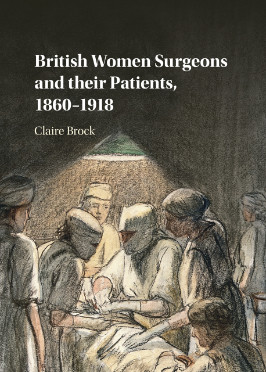
British Women Surgeons and their Patients 1860-1918 (Permission of BSHM)
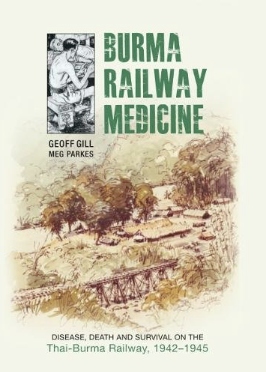
Burma Railway Medicine
The Borneo Graveyard 1941-1945

A Doctor's Sword
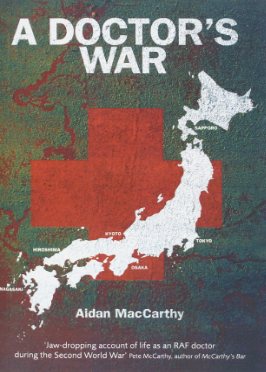
A Doctors War
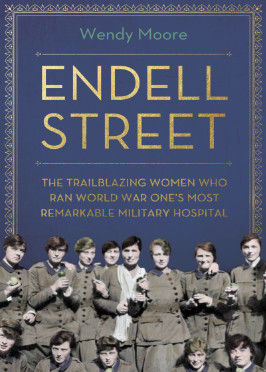
Endell Street
(Permission of BSHM)
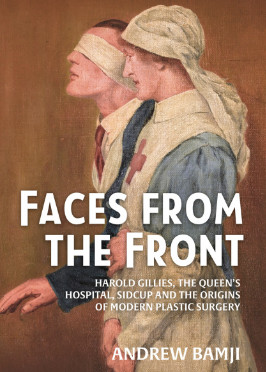
Faces from the Front
(Permission of BSHM)
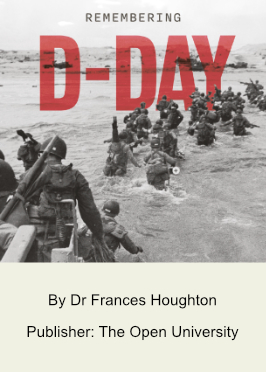
Remembering D-Day
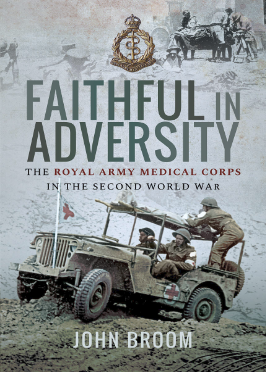
Faithful in Adversity

Gallant Little Wales
Gaza Medic
Military and Medical History in Malta - Recommended Books and Websites
Glimpses of War - Vol 1
Glimpses of the Falklands War

A Heavy Reckoning
(Permission of BSHM)

A Higher Call

The Holy Land, with Echoes of British Mandate
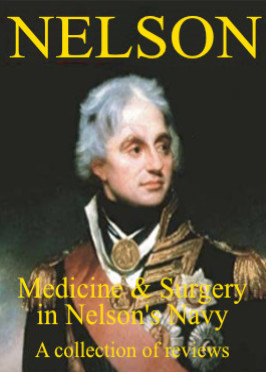
Medicine & Surgery in Nelson’s Navy
A Higher Call

The Life and Legacy of Dr James Lind
(Permission from BSHM)
Medicine & Surgery in Nelson’s Navy
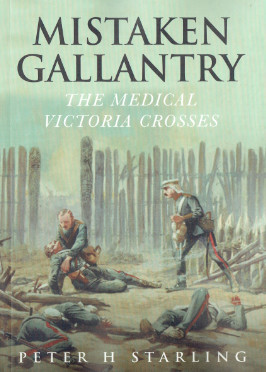
Mistaken Gallantry
A Surgeon in Napoleon’s Grande Armee (Permission from BSHM)
Nurses of Passchendaele
(Permission from BSHM)

The Royal Army Medical Corps in the Great War
(Permission from BSHM)
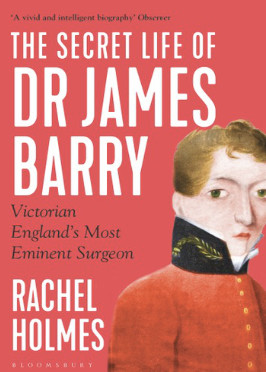
The Secret Life of Dr James Barry
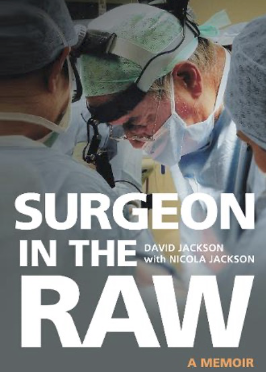
Surgeon in the RAW
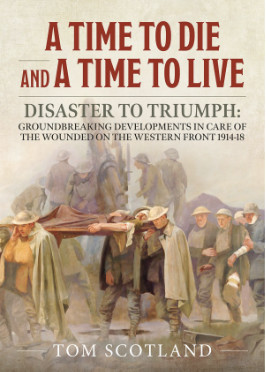
A Time to Die and A Time to Live
(Permission from BSHM)
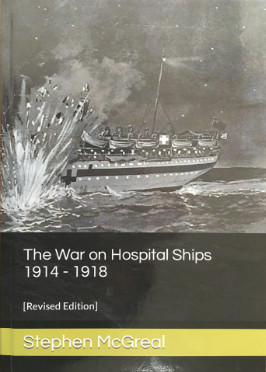
The War on Hospital Ships
1914-1918
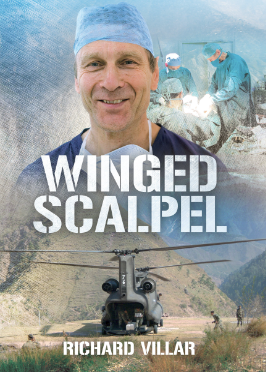
Winged Scalpel
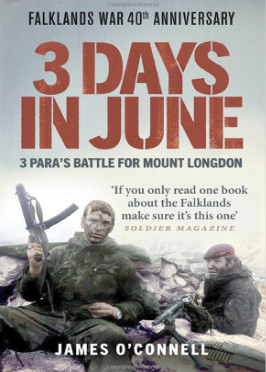
3 Days in June
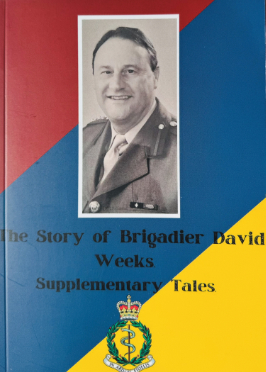
The Story of Brigadier David Weeks & Supplementary Tales
(two book set)

XX
XX
XX
XX
XX
XX
XX
XX
Medicine & Surgery in Nelson’s Navy (A Collection of Reviews)
By Peter Brinsden
A collection of reviews covering Medicine and Surgery in Nelson’s Navy.
Peter Brinsden
February 2022
Click here to download a PDF of this review (including Chairman's note)
A Doctor's Sword
By Bob Jackson
Collins Press, 2016. ISBN 1848892861
It is over twelve months since I reviewed the remarkable memoir by Air Commodore Aidan MacCarthy OBE GM, ‘A Doctor’s War’, recollecting his life as an RAF Medical Officer through the Second World War. This story has resonated with me over the past year as an incredible story of survival against the odds as a Far Eastern Prisoner of War, showcasing both the worst of humanity, and the best of mankind. Bob Jackson, taking a fresh look at MacCarthy’s life, agrees with this assessment, describing MacCarthy’s account as simply ‘the best story I have ever read’.
Jackson approaches the story from a different angle, and as such his book is a worthy companion to MacCarthy’s memoir, originally published in 1979. Separated from that by nearly forty years, and written long after MacCarthy’s death in 1995, this book adds extra layers of detail and context to what MacCarthy was experiencing through his long time in captivity. This context is provided by regularly zooming out of MacCarthy’s personal war and explaining why particular events were occurring at certain times.
It is over twelve months since I reviewed the remarkable memoir by Air Commodore Aidan MacCarthy OBE GM, ‘A Doctor’s War’, recollecting his life as an RAF Medical Officer through the Second World War. This story has resonated with me over the past year as an incredible story of survival against the odds as a Far Eastern Prisoner of War, showcasing both the worst of humanity, and the best of mankind. Bob Jackson, taking a fresh look at MacCarthy’s life, agrees with this assessment, describing MacCarthy’s account as simply ‘the best story I have ever read’.
In doing so it shows how MacCarthy’s experience and fate was woven into the stories of many others. Examples of this include the story of the US submarine which sank MacCarthy’s ship whilst he was being transported to the Japanese mainland, and the tale of the flight crew of the B29 bomber which dropped the second atomic bomb on the city of Nagasaki. This extra dimension is well researched and offers compelling detail yet does not detract from the underlying story.
Whereas MacCarthy’s book ‘A Doctor’s War’ ends in 1979, Jackson’s ‘A Doctor’s Sword’ continues with the final years of his life, and then also details the author’s research into the origins of the sword given to MacCarthy following his release. This works well, covering the story of how Jackson and MacCarthy’s family tracked down the relatives of the Japanese officer who gave MacCarthy his sword.
Jackson comments how much of MacCarthy’s original writing is often understated, with events that would merit whole chapters or books described in a sentence or two. The entire sequence of events describing the dropping of the second atom bomb for instance is discussed in just a few pages. Whilst this brevity leads to the original story being fast-paced, Jackson’s follow-up delves deeper into some of the events to which MacCarthy was witness, and as such is well worth reading after MacCarthy’s first-hand account.
Nathaniel Roocroft
August 2021
Click here to download a PDF of this review (including Chairman's note)
The Secret Life of Dr James Barry: Victorian England's Most Eminent Surgeon
By Rachel Holmes
Bloomsbury Publishing, ISBN: 978 1 40889 157 5
Reminiscences on the James Barry Room resulting in a good read, by Col (retd) Frank Davis
A few days before The Secret Life of James Barry written by Rachel Holmes was officially published (17 September 2020) I received a copy of the book in the post, endorsed by the author "For Frank with affection and thanks Rachel". It is axiomatic that I was thrilled, and the memories of James Barry and Rachel Holmes welled up in my mind.
My introduction to James Barry is as clear a memory as Rachel’s book is on my desk.
The day is the 1st of August, the year is 1966. I have just pressed the doorbell to gain entrance to the Headquarters Officers Mess Royal Army Medical Corps, the door was opened by a liveried door man and in the entrance a hand was stretched out in welcome. The greeting was by the Assistant Post Graduate Dean Brigadier Jack Lapper, there to welcome me - a diminutive, but excited Lieutenant.
I had entered through the portals of this august building to have lunch in what was the RAMC Headquarters Officers Mess Dining Room on the day I was commissioned.
Let’s go back to the entrance hall, such style surrounded me; as I stood in the hall gazing around
I saw on my left a door marked James Barry, a plaque marked Chavasse VC and bar and another plaque opposite for Martin Leake VC and bar. Then to my right were boards listing the Directors General and tucked away to my right the entrance to the VC Room, such a wealth of History. Not knowing where to start my opening conversation with Brigadier Jack Lapper I asked who was James Barry, to be told that the ladies room was named in his memory.
Many years later, my career had somewhat changed from being a young lieutenant to being the Director of Medical Supplies during the first Gulf War [1991] and I needed a refuge to meet and plan vital and classified medical equipment developments. The assumption was that Saddam Hussein had manufactured nerve gas and we needed ventilators to treat the potential case load (a parallel to COVID-19) so the consultant advisers in anaesthetics asked for large quantities of oxygen and multipoint respirators. The respirators were designed and manufactured by PneupacTM run by Rachael Weiss’s father; we developed and designed the oxygen concentrator in the Barry Room!
Time moved on and many years later I was very much involved with Friends of Millbank and developing the lecture programme. James Barry’s name came back into my head when I read a book review of Rachel Holmes’ first biography (2007) of James Barry. I decided to include a lecture on James Barry for the Friends of Millbank; so began my hunt for a lecturer and my reward was to meet Rachel Holmes, an exciting knowledgeable lady and, most importantly, an expert on the history of James Barry. The lecture was held in the Anteroom of what used to be the Officers Mess and it was very well attended and dare I say a major success...
David, in his Newsletter, reviews The Secret Life of Dr James Barry. I very much endorse his recommendation to buy the book. Read and enjoy every word.
Col (retd) Frank Davis
Emeritus Chairman, Friends of Millbank
October 2020
Click here to download a PDF of this review (including Chairman's note)
The Borneo Graveyard 1941-1945
By John SM Tulloch
Opus Publications, Kota Kinabalu (Borneo), 2020: ISBN: ISBN 978-983-3987-65-8
This book follows the raising of five Royal Artillery air defence regiments in 1939, their deployment in late 1941 to South East Asia, their short campaign in the Netherlands East Indies and eventual capture as POWs in Java and North Borneo. It depicts the sadistic treatment of Australian, British, Dutch and Indian POWs in the various POW camps in North Borneo. There were three death marches from Sandakan to Ranau.
The internee account covers the men, women and children from all over Borneo interned in Batu Lintang. They experienced the unspeakable behaviour of the guards. Several internees were killed trying to escape the Japanese regime or gratuitously executed just before liberation.
The locals of Borneo suffered terribly. Torture, executions and massacres occurred throughout. Malnutrition, starvation and death were endemic.
This scholarly and detailed researched book is written by John Tulloch who joined the New Zealand Army in 1965. He won the sword of honour at Officer Cadet School Portsea, Victoria, Australia and was commissioned into the Royal New Zealand Artillery. He served for a year in Vietnam as a troop commander and later as a Forward Observer with 9th Battalion Royal Australian Regiment. He developed great expertise in jungle warfare. He transferred to the British Army in 1973 and had a very active career with numerous deployments. He retired after 38 years’ service. For 21 years, including when he was an MOD civilian, he was called out to Brunei once or twice a year as a visiting jungle warfare instructor for the British Army Training Team Brunei (TTB). That is where I met him.
I have found this book review the most difficult I have ever had to do. For a number of years I was the medical advisor for the Royal British Legion War Graves Pilgrimage Department and I travelled out to the Far East regularly accompanying war widows and veterans. I have stood with widows beside their husbands’ graves and with children beside their fathers’ graves or memorials to the missing. I know how the men died or were murdered by the Japanese. John Tulloch’s book names individuals and the manner of their deaths. I have spoken in Sabah with an old man who as a boy ferried Japanese soldiers across a river on one of the Sandakan “death marches” and who saw the soldiers butcher alive two prisoners of war for fresh meat.
There are apologists for the Japanese who said that soldiers who surrender deserve no compassion. The British and Commonwealth troops who were captured in Singapore and Java did not surrender, they were ordered by their commander to lay down their arms. The code of Bushido is also given as a reason for brutality meted out on the POWs. There are seven virtues of Bushido: Integrity, Respect, Heroic Courage, Honour, Compassion, Honesty & Sincerity, and Duty & Loyalty. No one can ever deny the Heroic Courage of the Japanese soldiers, but where were the integrity, respect and compassion? I have stood by the graves of the three medical officers who survived the Sandakan death marches and whose outstanding medical care to the POWs was rewarded by being shot two weeks after the war had ended. The Japanese wanted no witnesses to their war crimes.
About 20% of the British, Commonwealth and Dutch POWs died on the horrific Siam–Burma Railway. By contrast every POW on Borneo’s Labuan and other Indonesian islands like Ambon and Ballale was murdered when they had finished building the airstrips for the Japanese. At Sandakan, the three death marches to Ranau, and at Ranau, 99.75% of the POWs perished by various means. Six Australians who escaped into the jungle miraculously survived and were saved by locals at great risk to themselves. There were no British POW survivors.
John Tulloch tells the story of POWs and civilian internees factually and with compassion. Their Red Cross food parcels were kept and stored by the Japanese while their prisoners starved to death. There will never be a better account written of this terrible time between 1941 and 1945 unless there is ever more access to Japanese records. This is very unlikely as they tried to destroy every record of their war crimes and many of their perpetrators committed suicide or were hanged as war criminals at the War’s end.
This book is beautifully produced and illustrated. It is a personal story of the search for the truth about what happened in Borneo 1941-1945. This is a story that needed to be told.
Col (retd) JC Richardson, FRCGP L/RAMC
July 2021
Podcast on the Japanese Occupation of Borneo based The Borneo Graveyard by John Tulloch
Click here to download a PDF of this review (including Chairman's note)
Burma Railway Medicine
By Geoff Gill & Meg Parkes
Carnegie Publishing Ltd, ISBN: 9781910837092
Imagine you had to choose only one book to learn as much as possible about the moving tale of the Far East Prisoners of War captured at the Fall of Singapore in the Second World War and what happened to them thereafter. You need look no further than Burma Railway Medicine. This compellingly readable, thoroughly researched, well illustrated and up-to-date tour-de-force by Geoff Gill and Meg Parkes from the Liverpool School of Tropical Medicine fits the bill perfectly.
Burma Railway Medicine pays due tribute to the remarkable efforts of the doctors and medical orderlies of the Royal Army Medical Corps (RAMC), amongst others. They struggled ceaselessly to carry out their life-saving work with minimal facilities and, remarkably, to document it meticulously and scientifically under the most extreme of circumstances during three gruelling years of captivity in pestilential jungle camps.
The book describes the genesis of several of the scientific works published in the Lancet and elsewhere immediately after the war, such as those by de Wardener on cholera, Wilson and Reid on malaria and nutrition, and Markowitz on amputation for tropical ulcer, which are classics in observational research. Indeed, the book could justifiably have been sub-titled ‘Steadfast in Adversity’, the translation of the RAMC motto, In Arduis Fidelis. Never was a motto so apt, or so lived up to.
Having just retired after serving in the RAMC myself for the last 34 years, reading this book was a truly humbling and inspiring experience, making me very proud of these forebears, even if they were admittedly ‘rather a mixed crowd’ whose experience and training varied immensely. Many lives were saved through invention and innovative techniques, by good disciplined organisation of medical services, and positive response to adversity.
A feature I particularly enjoyed is that the conclusions of the chapters collectively make a very readable history on their own. Many of the lessons learned the hard way by the medics in Thailand and Burma, and through the ongoing care and research thereafter into nearly ubiquitous posttraumatic stress disorder and the persistent effects of captivity, tropical diseases, vitamin deficiencies and malnutrition, remain surprisingly relevant today.
Burma Railway Medicine should be required reading for all military doctors, for all infectious disease practitioners, and for military and medical historians.
David Vassallo
February 2018
Published online at www.bshm.org.uk
Click here to download a PDF of this review (including Chairman's Note)
A Doctor's War
By Aidan MacCarthy
Grub Books, 2006; ISBN 10: 1904943403, ISBN 13: 9781904943402
With the Second World War looming large, a young Irish doctor by the name of Aidan MacCarthy flipped a coin with friends on a night out in London, and in doing so made the decision to sign up to the Royal Air Force instead of the Royal Navy. ‘A Doctor’s War’, first published in 1979, is his first-hand account of the extraordinary series of events which followed.
The understated title gives little insight into a truly awe-inspiring account of one man’s war, which takes the reader from the beaches of Dunkirk in 1940, to the aftermath of the second atomic bomb dropped on Nagasaki in 1945, with years of harrowing captivity in Java and Japan in between.
There are a number of specific reasons I would recommend this book. Firstly, it is both easy to read and well-paced, which when combined with subject matter involving a procession of near-misses by land, sea, and air, makes for an engrossing story.
Secondly, the book details some of the most important moments in world history from the unique day-to-day perspective of an individual. What actually happened in the days prior to the evacuation from Dunkirk during the retreat across France? What were the streets of Nagasaki like in the aftermath of an atom bomb being dropped? Historical accounts such as this delve into detail that is sometimes missing from a broader analysis, and MacCarthy’s story sheds fascinating light on these events.
Thirdly, the book is a valuable addition to the wealth of literature detailing the experience of the Far-Eastern prisoners of war. The majority of the book, and MacCarthy’s war, takes place in Japanese captivity in Java and subsequently in mainland Japan. As a Medical Officer, MacCarthy had a unique insight into the brutality and suffering inflicted by the Japanese towards him and his patients. This hardship is matched only by the prisoner’s resolve, ingenuity and humanity, and these qualities come to the fore during these chapters. From a medical perspective, MacCarthy describes the challenges of treating the infectious illnesses and deficiency diseases which ravaged the camp over these years; his determination to care for his patients despite lacking even the most basic of medical supplies provides an inspiring beacon of hope in their darkest hours.
Over the past few years there has been renewed interest and increasing recognition for the man behind the book, culminating in the Medical Centre at RAF Honnington being renamed in his honour by Prince Harry in 2017, some 22 years after his death. It was whilst stationed there prior to deploying to the Far East that MacCarthy was awarded the George Medal for rescuing the crew from of a burning plane -another remarkable tale found amongst many in ‘A Doctor’s War’.
I would recommend this book for anyone seeking an inspiring tale of heroism, humanity, and survival against all the odds.
Nathaniel Roocroft
Surg Lt Nathaniel Roocroft RN
April 2020
Click here to download a PDF of this review (including Chairman's Note)
Remembering D-Day

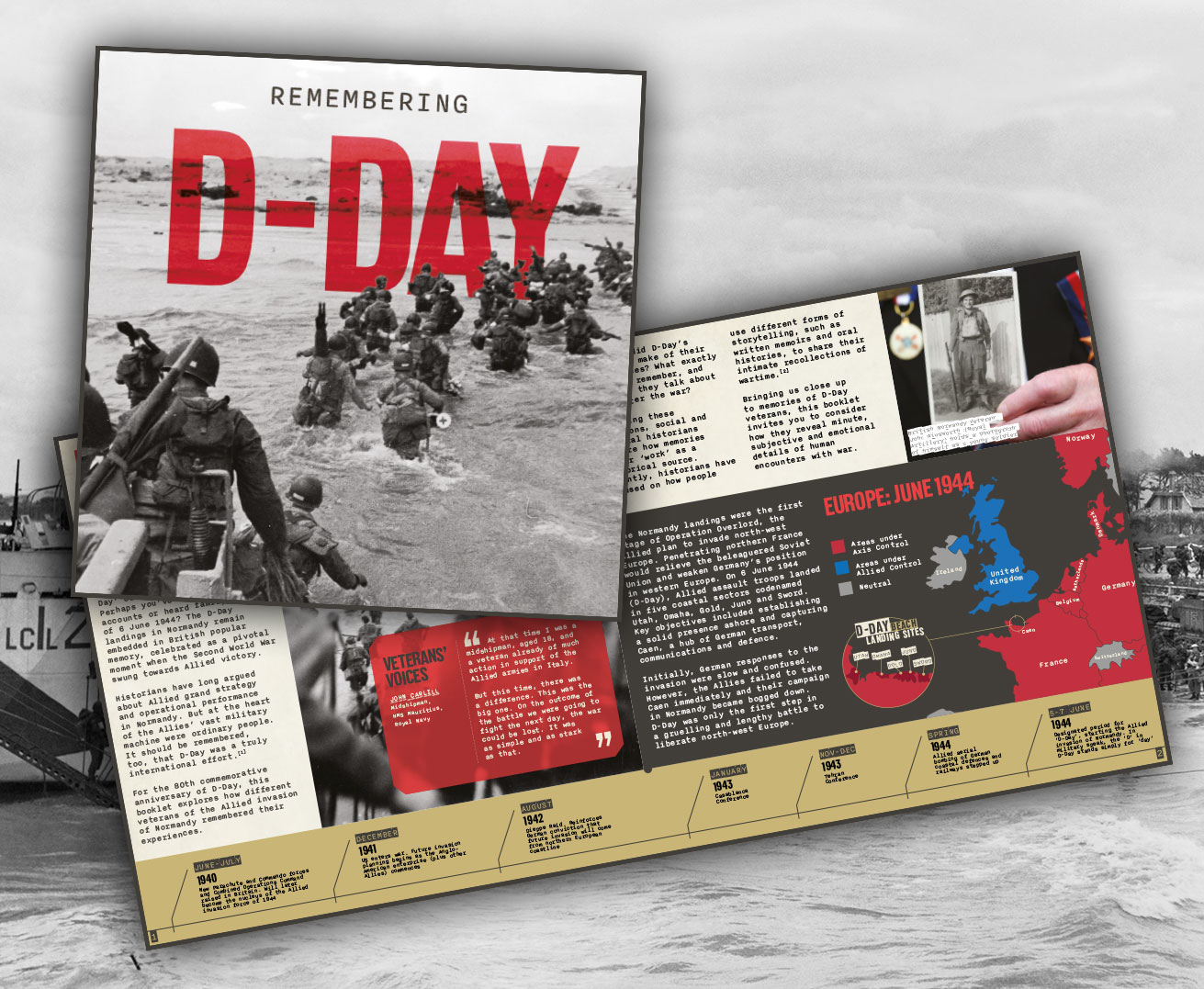
By Dr Frances Houghton
Publisher: The Open University
Review coming soon
Order your FREE 'Remembering D-Day' booklet from The Open University, marking the 80th anniversary by calling call 0300 303 0552 or visiting: D-Day tapes
Faithful in Adversity
By John Broom
Pen & Sword Military (2019), ISBN 978 1 52674 955 0
John Broom was a history teacher when a chance inheritance of family papers eleven years ago prompted his interest in the spiritual and ethical issues of twentieth century wars. He has since been awarded a PhD on Christianity in the British Armed Services and is now an established author.
The RAMC was active in all engagements in the Second World War. RAMC personnel were frequently in the heart of the action, risking their lives to provide medical support in all circumstances. That included going into captivity as Prisoners of War in Europe and the Far East, but also being involved in the liberation of concentration camps. Nearly three thousand doctors and other RAMC personnel were killed or died as a result of disease in the war.
Using previously unpublished archival material and personal family papers, this book sheds fresh light on the experiences of regulars, volunteers and conscripts, including conscientious objectors who were no less brave but refused to bear arms and kill the enemy.
The core of the book consists of the personal accounts of fifty RAMC personnel taken from letters, diaries and recordings, as well as other accounts from primary published sources. It is reminiscent of some of the “Voices” series of books about the two World Wars and the Indian Army, but in this case concentrating on one Corps.
There are nine chapters: the first deals with recruitment, organisation and training, and the last homecoming, demobilisation and reflection. The remaining seven chapters deal with the main theatres of war. The author gives a good account of every theatre of war and the personal stories of subjects make the whole situation come alive. I found these accounts fascinating and I learned a lot. I read in awe at some of the medical decisions that had to be made and the awful loss of life. What does it feel like when it is decided that one doctor should be left behind with the wounded to be captured by the enemy? Lots are drawn and the doctor who lost and is left behind tells of his sense of desolation and loneliness. You do not get that raw emotion in traditional military histories or the histories of the Corps.
Many of the photographs are interesting because they show the men whose personal accounts you are reading. The typeface is clear. There are comprehensive notes neatly placed at the back of the book so as not to interrupt the text. The sources and bibliography are excellent and a good guide to further reading. It is reassuring to realise that, when war seems a muddle, previous generations have adapted and coped with it. How they did so is an inspiration to us all. Some old lessons will have to be relearned.
This book will be of great interest to all members of the RAMC and those that have retired.
JC Richardson
Colonel (retired) John Richardson FRCGP L/RAMC
July 2020
Click here to download a PDF of this review (including Chairman's Note)
Gallant Little Wales
By David Jones
Publisher: Y Lolfa (June 2023) (www.ylolfa.com), ISBN: 978-1-80099-396-9
JThis is an inspiring, informative and compassionate account of the heartening response by the Welsh people to an international crisis, in rapidly funding, equipping, manning and deploying a 150-bed civilian field hospital to war in support of the Royal Army Medical Corps to face the daunting tribulations of unfamiliar wounds and epidemic typhoid disease. The volunteers served far away from home for months at great personal risk to themselves, overcoming adversity (including the deaths of the senior surgeon, matron and four other staff) to deliver outstanding surgical, medical and nursing care, and learning from their intense experience to help others thereafter. It held my attention throughout and should hold yours too. The book is aptly named, also recalling the heading of a contemporary account of the hospital’s send-off by the Prince and Princess of Wales, who rightly recognised the patriotic effort and goodwill that went into creating the Welsh Hospital.
The author is David Jones, a highly respected and recently retired Welsh orthopaedic surgeon with a passion for history. He has done justice to his forebears in bringing this story and that of many individual personalities to light for a modern audience, highlighting the relevance of human interaction and many lessons hard learned in adversity and in conflict. He has thoroughly researched the history of the Welsh Hospital and its volunteer staff, amongst them fellow surgeons John Lynn-Thomas (Cardiff Infirmary), Professor Alfred Hughes (then Dean of the Medical School at King’s College, London), Professor Thomas Jones (Owens College, Manchester), Robert Mills-Roberts (Llanberis Quarry Hospital, appointed as Chief Surgeon), and others, several of whom later built on their experience to distinguish themselves in the Territorial Force during the Great War and in civilian life.
The matron (Miss Marion Lloyd) and the nine nursing sisters were drawn from the newly formed Princess Christian’s Army Nursing Service Reserve. David sets them all in context, and moreover gives a good account of the vicissitudes of the Boer War itself.
The author rightly highlights the relationship with key military medical staff, particularly the newly promoted Lt Col Alfred Keogh, talented administrator and organiser, who commanded two hospitals of the fledgling RAMC, and who worked very closely with the Welsh Hospital. Keogh’s organisational skills in the Boer War catalysed his promotion to Director-General Army Medical Services in 1905, and his close relationship with the Welsh Hospital volunteers materially influenced his reforms of the Army Medical Services, his association with the Territorial Force, and his leadership of the British military medical services in the Great War. The importance of such close civilian and military medical co-operation was heeded in two world wars and multiple other conflicts to date; this lesson was learned through toil and sacrifice – Gallant Little Wales helps us to remember this.
Gallant Little Wales is being published just as the RAMC celebrates 125 years of existence; the RAMC has come a long way and progressed much since its baptism of fire in the Boer War, when civilian voluntary resources such as the Welsh Hospital had to be mobilised in its support, and doubtless it will continue to develop and earn its laurels in years to come. I am glad to see that the voluntary spirit remains alive and well in the RAMC and the wider Defence Medical Services, not least in Wales. Thus, the medical and nursing reservists of Cardiff’s 203 Field Hospital (which restructures this year as 203 (Welsh) Multi-Role Medical Regiment) deployed twice as a formed unit to Camp Bastion Hospital in Afghanistan to care for war wounded and ill in recent years.1 Welsh reservists were also involved with the setting up of Nightingale hospitals in the COVID pandemic. They are worthy successors to their compatriots in the Welsh Hospital of the Boer War – they can read this story with pride and empathy, and can continue to be inspired by it as they prepare for future conflicts.
This account should also be of interest to the civilian volunteer doctors, nurses, allied health professionals and supporting staff, many from Wales, who today step forward to man the United Kingdom’s WHO-certified Emergency Medical Team (a civilian field hospital, run by the frontline medical aid charity UK Med), or who volunteer with MSF or the Red Cross, in response to natural or man-made disasters, where life-threatening wounds and epidemics continue to present as much of a challenge as they did to the Welsh Hospital.
This motivational story of goodwill, of leadership and the volunteer ethos, of the benefits of close civilian and military medical co-operation, and of resilience and innovation in the face of adversity, remains as relevant today as yesteryear. It has interest and lessons for all, not least if you are a regular or reservist in the DMS, or a civilian, attached to a field hospital or EMT deploying to a war zone or natural disaster, or if you are involved in the medical response to an aggressor who is wantonly causing untold suffering and destruction in a European nation, and threatening World War, even as I write.
The story of the Welsh Hospital will continue to touch people’s hearts as long as the need to respond to conflict persists on this earth.
I unreservedly recommend Gallant Little Wales to you. Enjoy, and be inspired by volunteers.
Col (retd) David Vassallo FRCSEd MA L/RAMC
Chairman, Friends of Millbank
May 2023.
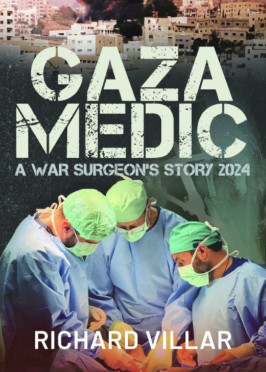
Gaza Medic - A War Surgeons Story 2024
by Richard Villar
Publisher: Pen & Sword Military, ISBN: 978 1 03615 020 4
Always start with the Dedication of a book if you wish to understand the author. Richard is speaking for everyone who has ever practised medicine in conflict, he has bared his soul, even if not overtly religious, and shown his motivating force, his concern for others:
‘To those affected by warfare, wherever you may be. You deserve better.’
The book’s 17 chapters, from ‘Getting Ready for Gaza’ to an emotional ‘Leaving Gaza’, describe in vivid detail Richard’s voluntary deployment in April 2024 as an orthopaedic war surgeon with an Emergency Medical Team from Medical Aid to Palestinians, to support the Al Aqsa Hospital in Deir-al-Balah in Central Gaza, during the Israeli invasion after the Hamas attacks of 7 October 2023. Their neat titles belie this very personal and moving story, this journey to hell on earth – a man-made hell, full of fear and ever-present danger, of wanton death and deliberate injury, mainly affecting women, children and the elderly in their thousands and ten thousands, yet one illuminated by hope and inspiration, by stories of steadfastness in adversity, of innovation and resourcefulness, of lessons learned and re-learned, and of the human spirit at its very best.
Richard’s story is simply and clearly told, and all the more powerful for that, as his Foreword testifies: ‘I brought some light into the Gaza darkness. Talking, taking sides, or having an opinion is insufficient.’ Throughout he wears his heart on his sleeve, and while trying to remain apolitical he hides nothing from the reader in facing up to man’s cruelty to man, including his fears and emotions, and his trials and tribulations – and those of others far, far worse off than himself. There is one telling exception - he keeps secret for their safety the names of many of those who helped him, other than the overseas members of his Emergency Medical Team – a sad indictment of how medics and aid workers, ambulances and hospitals, are purposefully targeted in this conflict.
Gaza Medic, this powerful eye-witness account, certainly shows how the author, an erstwhile SAS military doctor, now a renowned orthopaedic and humanitarian war surgeon, has given his all to help others. He has come a long way, retaining his humanity always, since he published a Personal View in the BMJ as a junior doctor in 1979.1 If you could choose only one book to visualise and appreciate the tragic reality of Gaza at war, and frontline surgery, this is the book. Be inspired, and in your own way bring some light into the Gaza darkness.
Richard is a keen supporter of Friends of Millbank. In the early months of the COVID pandemic he memorably delivered our first Zoom talk, on 30 October 2020: the George Blair Memorial Lecture ‘Winged Scalpel’, which attracted a record audience. The talk was not recorded, but his memoir of the same title, ‘Winged Scalpel’, tells the full story. Read the review at https://www.friendsofmillbank.org/books.
He will next be delivering the Friends of Millbank Haywood Memorial Lecture, ‘Gaza Medic – A War Surgeon’s Story 2024’, in person at Millbank and on Zoom, on Friday 28 March 2025 at 1830hrs. Registration is open already, via our Talks programme, or click HERE. All are welcome, do invite friends and guests, and share this invitation with others.
David Vassallo
Chairman, Friends of Millbank
30 October 2024
Click here to download a PDF of this review
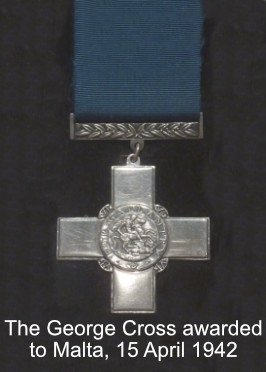
Military and Medical History in Malta - Recommended Books and Websites
Military and Medical History in Malta
David Vassallo’s recommended Malta Books and Websites
(National War Museum, Malta, Image by David Monniaux, wikipedia.org)
Click here to download a PDF of this review (including Chairman's Note)
A Higher Call
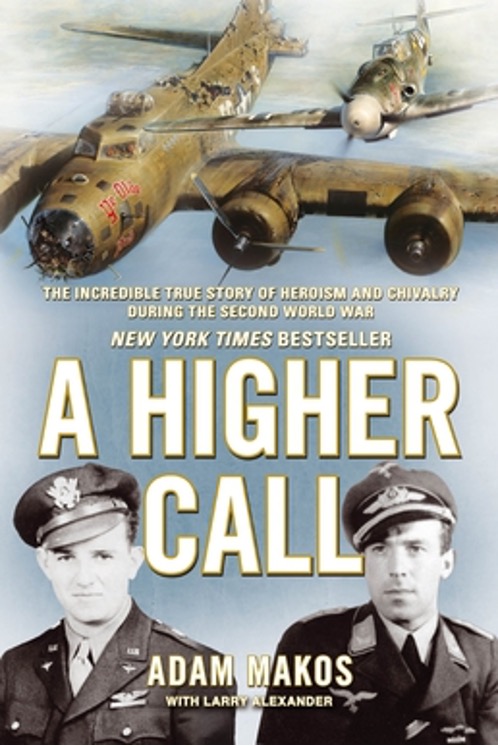
By Adam Makos with Larry Alexander
Berkley Books (USA), 2012; ISBN 978-0-425-25286-4
Atlantic Books (UK), 2013; ISBN 978-1-782-39256-9
A Higher Call is an offering of inspiration. It brings to the forefront the dictum by the renowned German military surgeon Bernhard von Langenbeck (1810 - 1887), that "A wounded enemy is no more an enemy, but a comrade needing our help". [1]
Adam Makos and Larry Alexander, two experienced military authors, team up to produce just such a stimulus. In this book, the story is depicted boldly on the front cover.
A Messerschmitt Bf 109, a German World War II fighter aircraft, is in the sky flying in formation with an American Boeing B-17 Flying Fortress. On close inspection, the US aircraft is severely damaged. One of the propellers is not functioning. Most of the aircraft weapons have been knocked out and some of the crew are badly injured. The nose cone is gone, half the tail is missing, the rudder is shot to pieces, and one can only imagine the damage to crucial internal aircraft parts. What must have been going through the mind of the American pilot when he sees the Luftwaffe fighter approach and, instead of shooting him down on his first pass, then fly in formation at his wing?
However, it leaves us with too many questions on detail, that are answered only in the words and chapters inside the cover. The two pilots, Franz Stigler and Charlie Brown, both survived the war, they met some 40 years later, and became the best of friends. Makos, the main author, approached Brown first, but was surprised to be instructed to interview Stigler in detail at the outset. Makos says himself, he would never interview the enemy, but he did. Affected by his own life-changing events, and already experienced in writing on military issues, he proves his ability in this publication.
Stigler’s biography is laid out in detail, from his early life, flight school and surveying flight routes for Lufthansa, to becoming an ace and teaching future pilots. But Stigler is a Nazi…OR is he? Here one might need to reflect on his mentor Gustav Rödel, who taught him never to shoot a man in a parachute. Brown’s life story follows and how they came together is recounted in this memorably inspiring true story of chivalry in war.
Anjna Harrar
December 2021
Reference:
1.Platt, Walter B. (May 1894). "Bernhard von Langenbeck" (PDF). The Johns Hopkins Bulletin (40). P.4
Click here to download a PDF of this review (including Chairman's note)
The Holy Land with Echoes of the British Mandate
A Doctor travels where the British trod
By John Walker-Smith
The Memoir Club, 2025; ISBN 978-1-8410423-3-6
I was initially lent a copy of this fascinating book of John Walker-Smith, published the year before the author’s 90th birthday, by Col (retd) Professor John Richardson, together with John’s own review and the similarly insightful review by Professor Almuthe Christina Hauer.
I have enjoyed reading this book and these reviews, and also the thoughtful review on The Memoir Club website by Stephen Hickey, recently British Ambassador to Iraq (2019-2021), at https://thememoirclub.blogspot.com/2025/03/the-holy-land-with-echoes-of-british.html , and the others added below that (now including John's and Almuthe's).
This book is a thoughtful, easily readable, personal perspective (and significantly a tolerant Christian one at that) on the troubled Holy Land, its peoples, faiths and history. Its echoes of the British Mandate (the League of Nations-sanctioned administration of Palestine and Transjordan, 1920-1948, after the defeat of the Ottoman Empire in WW1) also bring out well the Mandate's altruistic nature in trying to establish a home for the Jewish people while protecting Arab interests.
It’s worth highlighting this as the Mandate is now often wilfully ignored or mis- represented, despite its sincere and often heroic attempts to administer the region and reconcile the perhaps irreconcilable three Abrahamic faiths (1). Is this really a naïve hope?
There are lessons and cautions here for post-conflict recovery everywhere, and it’s extremely relevant for current and future conflicts in this flashpoint region, and their potential for spillover into wider Middle Eastern or global conflict. This book definitely provides a great introduction to this region and its challenges, which will stand the test of time, and doubtless will long be appreciated by military medical personnel and others with a direct or potential involvement with this region’s peoples, so intermingled is their history with religion and deeply held beliefs.
I also love the way the author involves two other great travellers (Treves is an Edwardian surgeon of renown, who visited the Holy Land in 1912 during the Turkish occupation, and H V Morton visited during the British Mandate, in 1934). I have several well-thumbed books by H V Morton on my own bookshelves, not least 'In the steps of the Master' and 'In the steps of St Paul'.
My initial hesitation before featuring this book was whether it would fit with the aims of Friends of Millbank (we focus on the heritage, achievements and ongoing relevance of military medicine).
I am absolutely convinced that knowledge and insight of the Holy Land’s history is indeed relevant to military medical practitioners (not least because of previous British military medical presence there, especially after Allenby’s capture of Jerusalem on 11 December 1917). I was hard-torn to decide whether, as a thoughtful personal account of a conflict-riven area, it would fit better within our Glimpses of War section than within Book Reviews. I heartily recommend this book to you, you can decide for yourself.
The author is also to be congratulated for his imminent 90th birthday celebrations at Apothecaries Hall on 1 December 2026!
David Vassallo, 03 July 2026
----------------------------------------
“The Holy Land with Echoes of the British Mandate”
Reviewed by Professor and Colonel (Retd) John Richardson
This book has a sub-title “A doctor travels where the British trod”. In fact there are two doctors: Sir Frederick Treves, and Dr John Walker- Smith. It is a charming autobiographical travel guide written by the author when he visited the Holy Land as a pilgrim in 1964 and as a medical delegate in 1987 and 1995. He quotes from Sir Frederick Treves’s book about his visit in the time of Ottoman rule and H V Morton’s travel books in Mandate times; the latter was required reading in religious studies when I was at school. So, we have three sets of opinions at significant different dates in history. It is a book that I would have liked to have with me when I visited Israel and Jordan in the 1980s. There is nothing written about after 1995 as it is a travel memoir. All this is covered in excellent detail in the other reviews on The Memoir Club website.
John Walker-Smith is a proud Australian and Empire loyalist. In the First World War Britain and her allies fought The Ottoman Empire on the Gallipoli Peninsular in Turkey where they were defeated and forced to withdraw. The Australian and New Zealand Army Corps (ANZAC) fought with great gallantry and it forged the identity of these Dominions. At the same time the Suez Canal had to be defended from the Turkish Army which was threatening this vital Empire trade route. The Turks were slowly pushed back but they successfully defeated the British 60th and 74th Divisions at the first and second battles of Gaza with heavy casualties. The fighting line extended far into the desert in the East where it ended in an open flank and was the site of manoeuvre warfare. On 31st October 1917 at the Battle of Beersheba there was a pivotal engagement when The Australian Light Horse gained international fame by charging and leaping the Turkish trenches armed with their bayonets, before then dismounting and achieving a significant victory. There are a couple of photographs in the book of the Australian Light Horse.
I did not really understand the military history of the Holy Land after the fall of the Roman Empire. John Walker-Smith describes the struggles between the three faiths that share their beliefs from common heritage, as they strive for the control over the holy city of Jerusalem. Only in two brief periods of history have they achieved parity under one administration, once in the 13th century and secondly under the League of Nations the British Mandate in 1920. The British Military opposed the acceptance of the Mandate. Sir William Wilson, Chief of the Imperial General Staff, said in 1919, “the Problem of Palestine is exactly the same as the problem in Ireland, namely two people living in a small country hating each other like hell”.
Ironically he was murdered by the IRA in 1922.
The British Mandate between 1920 and 1948 was a well meaning attempt to achieve harmony between the Arabs and the Zionists. Sir Ronald Storrs the Civil Governor of Jerusalem and Judea from 1917 to 1926 even held an annual service in the Anglican Cathedral for all faiths which was attended by leaders of the various Christian Churches, Orthodox, Armenian, Abyssinian, Anglican, Jews and Muslims, but this service was boycotted by the Latin Church; so much for intra-faith harmony! He ensured that the Palestine Mandate postage stamps did not have the British King’s Head on them, and all street signs were in English, Hebrew and Arabic. The initial good will was lost in the 1930s when the Palestine Police Force and British Army were subjected to terrorism culminating in the bombing of The King David Hotel in 1946. In 1948 the United Nations ended the Mandate to Britain’s relief and then the state of Israel was born out of Palestine with civil war between Arabs and Jews.
This thoughtful travelogue has brought back happy memories for me before the region descended into the political and military chaos that exists today.
Professor and Colonel (Retd) John Richardson
1. The Mandate is certainly worth studying, see also: ‘The British Mandate in Palestine – A Centenary Volume,
1920-2020’. Ed: Michael J Cohen
Click here to download a PDF of this review (including Chairman's note)
The War on Hospital Ships 1914-1918
By Stephen McGreal
ISBN-13: 979-8451246320 (first published 2008)
Revised edition (independently published, 2021)
At breakfast time on Tuesday 21 November 1916, the British hospital ship HMHS Britannic hit a German naval mine near the Greek island of Kea. Although the ship was not carrying wounded at the time of its sinking, there were 1,065 seamen, medical and nursing staff on board. One of these was Lance Corporal E Cyril Gregory, RAMC, who sustained injuries to his leg while abandoning ship. From his hospital bed in Malta, Gregory described this ordeal to his mother: ‘I with a great many more, jumped into the water for the purpose of swimming to some wreckage. No sooner had we done this than the suction of the propellers took me underneath and then I went beneath the waves.’ Gregory was comparatively lucky that day. Thirty of the ship’s company were later posted as dead or missing.
As the new edition of Stephen McGreal’s fascinating book, The War on Hospital Ships 1914-1918, relates, the sinking of Britannic – sister ship to the equally ill-fated Titanic – was far from the worst hospital ship loss of the First World War. Under the Hague and Geneva Conventions, hospital ships were entitled to protection from enemy attack. In accordance with the articles of war, hospital vessels were painted white and were well-illuminated, adorned with large red crosses and a horizontal band of green around the hull. Despite (and sometimes because of) this enhanced visibility at sea, McGreal narrates in heartrending detail how hospital ships became enemy targets from the outset of the First World War.
Despite the legal immunity granted to hospital ships, there was a consistent increase in attacks on these vessels. In February 1917, Germany announced a new policy of unrestricted submarine warfare in which any Allied hospital ships in defined zones would be considered belligerents and so subject to attack. This heightened the crisis facing medical humanitarian care afloat.
Increasingly viewed as a source of ‘fair game’ throughout the war, hospital ships also became pawns in the violent propaganda battles between Britain and Germany. As McGreal shows, the wartime British press frequently reported on German acts of aggression against hospital ships, showing a particular penchant for sensationalising distressing tales and images of drowned female nurses. This fuelled further ferocious atrocity propaganda in Britain which proclaimed that there were no limits to German barbarity and led to calls for reprisal raids on enemy hospital ships. Such was the emotional power of hospital ship
propaganda that belligerents on both sides frequently asserted that sinkings had been carried out by mistake or in good faith. Damaged or destroyed hospital ships were often accused of unlawfully transporting military troops or generally acting in a suspicious manner that warranted attack. A language of claims and counter-claims of culpability entered the febrile climate of wartime propaganda and international diplomacy.
Despite the national press’s best endeavours to suggest otherwise, the British also behaved reprehensibly. McGreal does not shy away from highlighting deplorable British actions against enemy hospital ships. The lawfulness of Britain’s controversial capture and detention of the German hospital ship Ophelia in October 1914, for instance, remains a hotly disputed issue and McGreal strikes a fair balance in acknowledging that contraventions of the laws of war were carried out by both sides.
First published in 2008, this revised edition of McGreal’s forensic examination contains new materials which shed additional light on the role of nursing staff and lines of communication in the hospital ship war of 1914-18. McGreal’s book pays tribute to the men and women of the RAMC, QARNNS, QAIMNS, VAD, and other branches of British and Commonwealth medical and nursing services in the armed forces, who found themselves performing duties of care in the alien and hostile environment of the First World War at sea. One of the book’s most touching features is its incorporation of a Roll of Honour which memorialises those who lost their lives in British hospital ships.
As a historian of the modern Royal Navy, one of the things which has often struck me when examining photographs of the death of ships is how starkly mechanical and impersonal it all looks through the camera lens. It can be difficult to comprehend that inside that squat bulk slipping down into the dark waves were real people, surely experiencing a horrifying gamut of feelings as they burned, boiled or drowned. It is almost impossible to imagine what it must have been like for incapacitated patients stuck in bed unable to save themselves, or for medical and nursing staff trying desperately to evacuate cases whilst knowing that they were sacrificing their own chances of escape. McGreal’s insightful and poignant writing, accompanied by plenty of photographs and survivor accounts, captures this human dimension of the hospital ship war.
Reading the excellent reviews of other books about wartime military medicine written by fellow ‘Friends’ of Millbank, I am struck by how many highlight historical atrocities meted out to Service doctors and nurses who should have been protected by the laws of war.1 McGreal’s book is a welcome addition to this literary firmament, reminding us that historical humanitarian crimes also stalked wartime medicine in the maritime world.
Well-researched, beautifully written, and richly detailed, McGreal’s book is an engaging and recommended read.
Dr Frances Houghton
February 2023
Click here to download a PDF of this review (including Chairman's note)
Winged Scalpel
By Richard Villar
Pen & Sword Books Ltd (2012), ISBN: 978 1 78159 168 0
In this compelling memoir, Richard Villar - former Regimental Medical Officer for 22 Special Air
Service - chronicles his time outside of the military and his involvement in some of the worst disasters and wars experienced in recent memory. Now a Consultant Orthopaedic Surgeon, the author recounts his time helping survivors of three major earthquakes - Kashmir (2005), Java (2006), and Haiti (2010) - as well as supporting both fleeing refugees and injured combatants in the Libyan Civil War (2011). With a fast-paced reflection on these crises, Richard does not hold back from describing both his successes and his rustrations in dealing with international aid organisations. He provides an insight into a mysterious world that few see, and even fewer are part of.
Describing the humanitarian aid pathway, from the disjointed journeys into disaster zones, to building aid networks in places where nearly all infra-structure has been destroyed, the author and his dedicated team met challenges and pressures that few will ever experience. Acting as a ‘fixer’ and a disaster surgeon for aid organisation Merlin,1-2 the team goes up against trauma and disease rarely seen in the modern world. Whether it is hosting clinics for hundreds of displaced men, women, and children on mountain plateaus still suffering from aftershocks, performing surgery on horrific injuries created by falling buildings, or escaping across Libyan deserts reminiscent of WW2 SAS exploits, Winged Scalpel is an exciting read from beginning to end.
Alongside the first-person accounts of these events, the author takes such an open and honest approach to writing. You can feel the intense stresses and emotional toll that operating in such environments can have on a person. Deciding who receives surgical treatment, and who will be left behind, is surely one of the hardest decisions to be made by a disaster medic. These daily judgments are described with raw and unabashed emotion by the author, demonstrating the strain that trying to help disaster-stricken people can have on those involved.
Fans of humanitarian medicine biographies, such as War Doctor by David Nott, could hardly do better than read the heroic experiences described in Winged Scalpel. I would heartily recommend this as essential reading not just for medics, but for anyone seeking an eye-opening journey through the stress, sadness, and heroism of disaster medicine in the 21st century.
Christian Perkins
June 2020
Click here to download a PDF of this review (including Chairman's note)
Surgeon in the Raw - A Memoir
By David Jackson with Nicola Jackson
Mereo books (2020), ISBN: 978 1 86151 966 5
This is an eye-catching, informal and very readable personal account by an experienced and well-respected military and NHS general surgeon, which kept my attention riveted throughout and which should hold yours too. It is aptly named, for it is raw with emotion at times. The protagonist is David Jackson, who made his name serving his country as a military surgeon in the Falklands War1 . He is also known to me personally from the time when we operated together to save the life of a soldier critically injured by the Provisional IRA (see ‘A Shooting, BMH Munster, 1989’ in this book).
Surgeon in the Raw provides a series of privileged glimpses behind the scenes against the different backdrops of his training in the heyday of general surgery and of relatively recent military conflicts, spanning the Northern Ireland Troubles and the Falklands conflict, the British military hospitals in Germany around the end of the Cold War, and the Balkans conflicts of the 1990s. Many people who served at the same time as the author will recognise the scenarios and personalities he mentions –
I for one recognised several friends and many familiar names. It is not all about conflict, for there are exciting accounts of postings to distant military hospitals in Hong Kong and Nepal, sadly no more. These are followed by his fulfilling NHS career in Wales at what was affectionately nicknamed ‘BMH Aberystwyth’ until retiring ‘in stylus’ in 2012. I suspect that his NHS colleagues and patients will also remember David fondly through this book.
David Jackson commanded one of the two field surgical teams in the Falklands conflict, the other commanded by Jim Ryan. He narrowly escaped with his life when the RFA Sir Galahad was bombed, though three other RAMC colleagues were numbered among the dead. He then helped care for the burned and wounded survivors (see his chapter ‘Aim for the Ocean, The Falklands War, 1982’).
The book is interlaced with the unfolding drama not just of war but of personal anguish as the author’s life and career were torn apart by marital infidelity and then stitched back together with the help of his co-author, who became his friend and later his wife.
The book vividly recounts the life experiences of a compassionate man with a real knack for writing and a wry sense of humour. It is blunt and explicit at times, which may be off-putting to some, but don’t worry about that for the whole is so much greater than a few words. I sense the writing of this book has been cathartic for David and his co-author Nicki, for David lays his heart bare to the reader, being open about the hurt he has suffered, in war or otherwise, and many will empathise. Balancing this, he intersperses his account with many memorable surgical case histories selected for their educational and historical value from carefully recorded contemporaneous diaries (a habit that should be actively encouraged in all military medical trainees). The author has dedicated his book to the victims of war, military and civilian; the reasons are clear within.
Surgeon in the Raw is a worthy and welcome addition to the genre of military surgical memoirs, bringing its own unique contribution to the field, and filling a gap in accounts by RAMC surgeons.
It differs from classics such as Edward Churchill’s Surgeon to soldiers (Oxford: Blackwell Scientific Publications, 1972), but it certainly sits well alongside it and more recent publications such as Richard Villar’s Winged Scalpel (Barnsley: Pen & Sword, 2012) and David Nott’s War Doctor (London: Picador, 2019).
The Contents pages below to give you a feel for the book and its structure, and to whet your appetite. I unreservedly recommend it for your reading list.
David Vassallo
Chairman, Friends of Millbank
February 2021
Click here to download a PDF of this review (including Chairman's Note)
Mistaken Gallantry - The Medical Victoria Crosses
By Peter H Starling
(Bath: Brown Dog Books, 2021)
This beautifully illustrated paperback book on the Medical Victoria Crosses, newly published in April 2021 with a foreword by Major General Alan Hawley CBE, is a welcome and important addition to the field of military medical history, and even more so to the corpus of inspirational books honouring the bravest of the brave, who received the nation’s highest award for gallantry. Its author, Peter Starling, who has put his heart and soul into producing this excellently researched book, is well known as a military medical historian of national repute, previously curator of the Army Medical Services Museum (now the Museum of Military Medicine). Mistaken Gallantry is on sale for the very reasonable price of £14.99 through the Museum of Military Medicine, helping raise funds for the Museum’s move from Keogh Barracks to a splendid new location in Cardiff in 2023.
It is a very worthy successor to the smaller 1988 book ‘The Medical Victoria Crosses’ by Colonels Forsythe-Jauch and Tennuci. Mistaken Gallantry differs significantly from, and greatly improves upon, its predecessor in being arranged chronologically with chapters dedicated to individual campaigns, from the Crimean War through to the Second World War, a style which really helps set the scene and context in which particular Victoria Crosses were won. The stories of the individual recipients shine through. It also includes the story of the Netley Victoria Cross, presented not to an individual but to the Army Medical Services as a whole when Queen Victoria placed it beneath the foundation stone of the new military hospital at Netley on Southampton Water. The book, in the words of Alan Hawley, is definitely one to read and re-read. Know and value your heritage. And be inspired.
David Vassallo
Chairman, Friends of Millbank
April 2021
Click here to download a PDF of this review (including Chairman's Note)
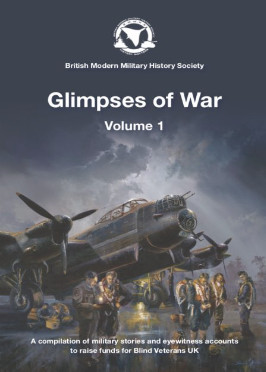
Glimpses of War - Volume 1
British Modern Military History Society
British Modern Military History Society (BMMHS), April 2021
Editors: Andy Cockeram, Jerry Cockeram, Dr Linda Parker, Nigel Parker
ISBN: 979-87-37745-93-6
A compilation of military stories and eyewitness accounts, raising funds for Blind Veterans UK
The BMMHS fully deserves to be congratulated for this inspirational book of history in the making, conceived under most unusual circumstances in 2020, nurtured carefully to gestation, and delivered healthy into the light of day well in time for the VE-Day commemorations and to raise funds for Blind Veterans UK. This is its story …
The British Modern Military History Society, www.bmmhs.org was founded in early 2019 by two brothers, Andy and Jerry Cockeram, whose passion for military history had been ignited by their research into the life of a distant relative, Gunner James Willie Barker, killed by a German artillery shell on 22 March 1916 and now buried alongside a comrade from his battery who died that day, probably at the same time. Andy and Jerry were the first members of their family to ever visit James’s grave in France. James Willie Barker was simply ‘An ordinary man just ‘doing his bit’, but not forgotten, and this emotional story is but one of many compelling vignettes and inspirational eye witness wartime accounts compiled over the last twelve months for this unique ‘lockdown’ book, the proceeds from which will support Blind Veterans UK (formerly St Dunstan’s, at Ovingdean near Brighton).
The BMMHS came into being when Andy and Jerry began organising monthly talks for anyone interested in military history over the last 200 years. Their high quality speakers included writers, academics, former military personnel, and experts in their field, and their meetings in Woodcote Village Hall (near Wallingford) in South Oxfordshire regularly attracted up to 100 participants – until the coronavirus pandemic and the first national lockdown intervened and meetings had to cease in March 2020.
Their determination to overcome this challenge led them to initiate instead a very popular series of twice-monthly Zoom talks (which has raised over £1,000 for military charities to date). Actual meetings in the Village Hall will hopefully resume in September 2021, while their Zoom talks will also continue, on a monthly basis, enabling a keen and growing audience to attend from far and wide.
The idea for ‘Glimpses of War’ was also born during the first COVID lockdown: BMMHS members and associates were asked to search their family archives for personal or family accounts of wartime experiences, military or civilian, any war, in any role, to raise funds for Blind Veterans UK. This touched a chord in a pent-up population under attack from an invisible enemy, and the floodgates were opened. The immediate result is ‘Glimpses of War – Volume 1’, with its striking front cover painting, ‘No Moon Tonight’ by Simon Atack, of a newly formed bomber aircrew’s first operational flight over Occupied Europe. Every one of the 74 separate accounts contained in Volume One delivers its own emotional impact. These accounts are broadly divided into three sections: The Great War and Conflicts pre 1939; the Second World War (covering maritime, land and air operations, with further vignettes from the war against Japan, the Home Front, Occupation and Resistance, and POWs, Escape and Evasion); and Post 1945 Conflicts. The latter includes a particularly moving Falklands War excerpt from ‘White Ship – Red Crosses’ by Senior Nursing Officer Nicci Pugh QARNNS (on SS Uganda) and Chief Petty Officer (and BVUK member) Terry Bullingham RN (blinded during the attack on HMS Antrim on 21 May 1982, and subsequently treated on board SS Uganda).
So many other contributions have been received that Volumes Two and Three are already in preparation, all for the same excellent cause. Do buy Glimpses of War – Volume 1 now. I encourage you also to send in your own vignette or family record for publication, you are still in time to contribute as Friends of Millbank from your own wealth of personal or family military medical experiences from recent and not-so-recent conflicts.
This is our second Book of the Month, it is dedicated ‘to all those who have experienced war and conflict’, and it is the perfect one to commemorate the ending of the war in Europe in 1945.
David Vassallo
May 2021
References
1 ‘No Moon Tonight’ ©Simon Atack, see https://www.simonatack.com/shop/limited-edition-prints/no-moon-tonight/
2 Pugh, Nicci. White Ship – Red Crosses. A Nursing Memoir of the Falklands War.
Click here to download a PDF of this review (including Chairman's Note)
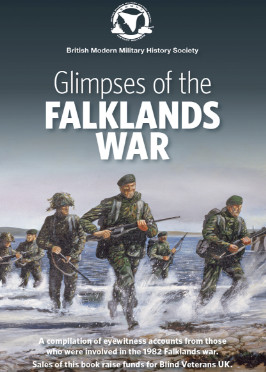
Glimpses of the Falklands War
British Modern Military History Society
British Modern Military History Society (BMMHS), 14 June 2022
Editors: Andy Cockeram, Jerry Cockeram
ISBN: 979-88-07560-23-0
This is the third compilation of eye-witness accounts published in the remarkably short space of 13 months by the British Modern Military History Society (BMMHS) in their ‘Glimpses of War’ series, initiated under the impetus of the COVID-19 pandemic. Sales of each book aptly raise funds for Blind Veterans UK, a registered military charity.
The first two volumes of ‘Glimpses of War’ (published May and October 2021 respectively) each covered a range of modern conflicts, whereas Glimpses of the Falklands War (published to mark its 40th anniversary) covers exactly what it says. It is all the more cohesive and effective for being so focussed. All aspects of the conflict and its background are covered chronologically in thematic chapters, with accounts by veterans on both sides, as well as by Anglo-Argentines and Falkland Islanders. There are also poignant reflections on the aftermath of this war and on reconciliation.
The decision to create this commemorative Falklands edition was made only in November 2021, with a call for contributors. The appeal obviously touched a cord, with the editors tapping into an unexpectedly rich vein of vivid memories as they were inundated with personal accounts, photos and diary extracts, most of them never before published. Putting pen to paper was clearly cathartic for many veterans and Islanders.
The chapters ‘Medics, Padres … and a Lawyer’ and ‘Reflections 40 Years On’ will certainly resonate with Friends of Millbank, as well as anyone else interested in military medicine or nursing, with it coming as no surprise to read that friends and foe were treated alike and with dignity and compassion throughout. I was very pleased to see that three Friends of Millbank (John Burgess, David Jackson and James Ryan) have contributed their moving accounts of the struggle to save lives ashore, alongside excellent contributions by naval nurses Liz Ormerod, Geraldine Carty and Nicci Pugh from HMHS Uganda. Several other contributions elsewhere have medical relevance.
The date of publication, 14 June 2022, commemorates the liberation of Stanley and the ending of the Falklands War 40 years ago. The fighting may have ended then, but the mental and physical scars of this conflict remain, as is evident in several accounts here. The healing is still going on. The book is dedicated to all those who were touched by this war and to those who fought and died for freedom and the right to self-determination.
The BMMHS editorial team, led by brothers Andy and Jerry Cockeram, are truly to be congratulated for their indefatigable efforts in bringing together this superb collection of eye-witness accounts, often enhanced with touches of humour and humanity, all in the space of some seven months. A printing error affected page numbering in the List of Contributors in the first print-on-demand copies, rapidly spotted and rectified within days – potentially adding to future rarity value in what will doubtless prove a popular book.
‘Glimpses of the Falklands War’ provides an excellent insight into how individuals react and adapt to the challenges and shocks of a closely fought war, without air superiority, against a determined, professional and powerful enemy (especially in the air), thousands of miles away. The lessons from this war and its mass casualty situations remain as relevant now as forty years ago, indeed even more so. The book is a glimpse of today.
The overriding message from this war is its clarion call to protect freedom and the right of self-determination, in the face of aggression, whether by Galtieri, Putin or another. This was eloquently stated on behalf of the Falkland Islanders in the mother of parliaments:
“They may be small in number, but they have the right to live in peace, to choose their own way of life and to determine their own allegiance.”
Margaret Thatcher (Prime Minister), quoted from Hansard, 3 April 1982
I highly recommend ‘Glimpses of the Falklands War’ to you, and the others in this series.
David Vassallo
Chairman, Friends of Millbank
21 June 2022
Click here to download a PDF of this review (including Chairman's Note)
3 Days in June
By James O'Connell
This edition: Monoray, 2022 (Octopus Publishing Group, London);
ISBN 978 1 91318 361 5
Privately published edition: 2013
‘Serving your country can take quite a toll on your mind and body, but we will always be there
for one another’ (James O’Connell, closing words)
This year is the 40th anniversary of the Falklands War, precipitated by Argentina’s invasion of the Falkland Islands on 2 April 1982, and ending with the surrender of the invading forces on 14 June. This short war has nonetheless had lasting effects on the lives, minds or bodies of all those involved on both sides of the conflict, and on many families of those who fought. Several commemorations and books are marking this anniversary, not least among them James O’Connell’s 3 Days in June.
I have chosen to recommend 3 Days in June to you as our Book of the Month for three main reasons.
Firstly, from an overall military and historical perspective, this is an outstandingly well-researched and well-written oral history record of the definitive battle of the Falklands campaign – and a fitting tribute to those who gave their all on Mount Longdon. The author – who fought at Mount Longdon (as Private Jimmy [Scouse] O’Connell of the Third Battalion, The Parachute Regiment) and was seriously wounded himself – was determined to portray the battle as it actually was, and not as one man’s or historian’s account.
He has spent years and travelled thousands of miles to record, transcribe and collate personal accounts from over 148 veterans, including Argentinians involved in the defence. He has done a sterling job interpreting and juxtaposing all their individual snapshots of a modern infantry battle, depicting the chaos, confusion, mayhem, terror, tears and drama involved in a night attack through minefields and against prepared defences, much of the time under artillery and mortar fire. The result is a superbly coherent and vivid portrayal of the whole. Above all else, it demonstrates courage, compassion and self-sacrifice, the readiness of soldiers to sacrifice their lives for their mates. Very few modern battles if any can have been examined so painstakingly and comprehensively at platoon and company level, from the perspective of so many individual soldiers on both sides. One fascinating snippet is by Argentinian veteran, Cpl Gustavo Pedemonte, 7th Infantry Regiment, who was eyewitness to the clash between Sgt Ian McKay and Argentine forces that resulted in McKay being awarded the Victoria Cross – an extremely rare account by an enemy soldier of a Victoria Cross action.
All soldiers in today’s Armed Forces would be well advised to read this book in training in case they are called upon to face the real thing in the near future – a distinct possibility as I write.
Secondly, from a military medical perspective, the book’s final chapter ‘Medical and Evacuation 3 PARA and Attachments’ uniquely records many personal accounts by casualties and connects them with the accounts of the medics and junior doctors, and padre, at the regimental aid post, together with accounts by helicopter crewmen evacuating these same casualties from the battlefield. Thus, we have a vivid and true-to-life portrayal of what is now described as the ‘operational patient care pathway’. Casualties (often critically wounded at the time and sometimes not expected to survive) describe what happened to them from point of wounding, through reception and life-saving treatment by RAMC medics (not least, Pte John Kennedy, who received a Certificate of Commendation) and doctors (Captain John Burgess and Captain Mike von Bertele) at the regimental aid post, and onwards to safety. The RAP often came under artillery or mortar fire and everyone there was continually at risk of injury or death. Very useful lessons can be gleaned by reading these accounts.
My final reason for recommending 3 Days in June to you, specifically the chapter ‘Medical and Evacuation 3 PARA and Attachments’, is to set the scene and invite you to our commemorative talks ‘The Falklands War, 40th anniversary - Personal Reflections from Role 1 and Role 2’, by John Burgess (Regimental Medical Officer 3 PARA, as above) and David Jackson (OC No.1 Field Surgical Team) on Friday 1 July at Millbank (and on Zoom). The registration link is on www.friendsofmillbank.org. Please do come to Millbank to meet and listen to each speaker, if possible, otherwise do attend on Zoom. Should you read this after 1 July, recordings of the talks will be on our Members Area.
Personal accounts by John Burgess and David Jackson, and by Jim Ryan, are also being published in a new book ‘Glimpses of the Falklands War’, by the British Modern Military History Society (14 June), and on our ‘Glimpses of War’ webpage: https://www.friendsofmillbank.org/gow/
The book 3 Days in June is dedicated to the memory of those who gave their all on Mount Longdon.
Peace is not bestowed, it is achieved through sacrifice.
David Vassallo
Chairman, Friends of Millbank
16 May 2022
Click here to download a PDF of this review (including Chairman's Note)
The Story of Brigadier David Weeks & Supplementary Tales
(two book set)
By David Weeks
Edited by Kiya McFarlane
Self published: March 2025
Paperback, two book set, limited edition; 50pp, 34pp; self-published, March 2025
Available via Richard Weeks, rich@2glassy.com at £20 for both books, including p&p
I had the delight recently of meeting 91 year old Brigadier (retd) David Weeks L/RAMC (born 1934) at his residence in Templeton Place Care Home, Southampton, together with his son Richard and the Templeton Place Wellbeing coach Kiya McFarlane, to discuss his newly published autobiography – a joy to read – and enjoy the warmth of their hospitality.
David, whose memories are as sharp as ever, grew up in and around Bristol, experiencing war as a child, going on to earn a scholarship to Queen Elizabeth’s Hospital boarding school, before studying medicine and qualifying from Bristol University in 1957. En route, he had fallen in love with Margaret, a staff nurse working the same night shifts as himself, and they married in February 1958, eventually having three children and a long and happy married life together (before Margaret sadly died in 2022).
David was soon called up for National Service, but on discovering a more palatable alternative he opted for the Regular Army, being accepted onto a five year Short Service Commission with the Royal Army Medical Corps – and a first posting to Singapore. Margaret initially had to stay behind in Bristol until she had delivered her second child, but they loved Singapore and soon found that the military lifestyle suited them perfectly so David converted to a regular commission. He initially opted for training in anaesthesia before discovering he enjoyed soldiering equally with medicine. He decided to embrace a different pathway, being instantly rewarded with a posting to a battalion about to embark on an overseas tour – to Singapore, for the adventures of which and thereafter you’ll have to read his autobiography!
David became the first resident at the newly-opened Templeton Place Care Home in August 2024. On recounting some of his recollections and tales from an exotic military service and family life, including his exciting years in Singapore and Borneo (the highlight being Regimental Medical Officer to 1st Battalion Argyll & Sutherland Highlanders, 1963-1967, and undertaking peace-keeping duties in Borneo, during which he was Mentioned in Despatches), Assistant Commandant at the Royal Army Medical College in Millbank (1971-1973), command of 19 (Airportable) Field Ambulance in Colchester (1973-1975), various courses and staff appointments, and finally promotion to Brigadier and command of the prestigious Queen Elizabeth Military Hospital in Woolwich (1985-1987), he was encouraged by Kiya to type out and relate his experiences.
His oral history was supported by his rich collection of contemporaneous documents and photographs, then edited and arranged by Kiya, illustrated with many of David’s own photos, and printed locally in Southampton. ‘Supplementary Tales’ followed within weeks, at the earnest behest of his original audience who encouraged David to squeeze a few more tales out of his memories, with chapters bearing such intriguing titles as Culinary Capers, Penan Purgatory, A Borneo Goodbye and From Bronze to Silver, amongst others.
My particular favourite is From Bronze to Silver, relating to the choice of gift to be presented to Her Majesty Queen Elizabeth the Queen Mother on her graciously accepting to lay the foundation stone of the new Queen Elizabeth Military Hospital in 1972. David was then Assistant Commandant at Millbank, assisting the Director General and Commandant with the choice. This triumvirate realised that the two-foot high bronze statue of a stretcher bearer carrying a wounded soldier, in the entrance hall of the College, would be ideal as a model for a smaller silver presentation piece. When Mr Angeloni, the Italian silversmith chosen for this project, was invited to view the bronze statue, he was unexpectedly and totally overcome with emotion. It turned out he had personally cast the original bronze statue as his examination test piece to qualify as a silversmith. He was delighted to be asked to cast it in silver for Her Majesty the Queen Mother. Truly a case of from Bronze to Silver.
David celebrated his 91st birthday whilst writing these memoirs, which are narrated in a particularly engaging and very readable third person style. They are a wonderful inspiration to all of us who have travelled widely, enjoyed the journey and given much in return while serving with HM Forces and the Defence Medical Services in recent decades, encouraging us to record our own experiences of military medicine and this passing world for posterity and to inspire those who come after us.
1 Templeton Place Care Home, https://www.hamberleycarehomes.co.uk/care-homes/templeton-place-care-home/
2 19 (Airportable) Field Ambulance was formed in Colchester on 1 November 1960. It subsequently went through several re-designations and role changes before being re-designated on 1 October 1993 as 19 Air Mobile Field Ambulance. On 31 August 1999 both 19 Air Mobile Field Ambulance and 23 Parachute Field Ambulance were disbanded to form 16 Close Support Medical Regiment on 1 September. It is an antecedent unit of the current 16 Medical Regiment. See https://www.friendsofmillbank.org/current-units/ .
3 This bronze statue now embellishes the AMS HQ at Robertson House, Camberley alongside its companion piece of a camel fitted with a cacolet for carrying a stretcher.
David Cecil Weeks – a brief service resume
Qualifications: MB ChB 1957, DTM&H 1967, MFCM 1973.
Postings: UK 1958 - 59, FARELF (Far East Land Forces) 1959 - 62, UK 1962 - 63,
RMO 1 A & SH (UK/FARELF/Borneo) 1963 - 67, Senior Post Graduate Course 1967,
NBC School Winterbourne Gunner MO/Instructor 1967 - 70, DADMS HQ 2 Div 1970 - 71,
RAM College Assistant Commandant 1971 - 73,
OC 19 Field Ambulance 1973 - 75. OIC TDT AMS RAMC Training Centre 1975,
National Defence College Course 1975 - 76, MOD ADG AMD2 1976 - 79,
ADMS 1 Armd Div HQ & Sig Regt 1979 - 83, MOD Col AMD1 1983 - 85,
CO QE Mil Hosp Woolwich 1985 – 88.
GSM 1962, Clasp Borneo, MID, GSM Clasp Malaya, OStJ.
David Vassallo
Chairman, Friends of Millbank
March 2025
Click here to download a PDF of this review
Affiliated with the British Society for the History of Medicine.
Subscribing members of Friends of Millbank can register with the BSHM as members of an affiliated society

Search our Site
When your search results show, scroll down past the ‘Ads’ to find results from our website
Search our Site
Join the Association
If you would like to watch previous talks and attend new ones for free, do consider joining our association.
Only £20 per annum (valid to end December 2023).
Students enrol free.
